Contactless Monitoring at Scale: Barriers and Solutions
Healthcare organizations face four specific barriers when deploying contactless monitoring at scale: clinician trust in accuracy, video data privacy concerns, EHR integration complexity, and environmental reliability challenges. Success requires systematically addressing each barrier through validation-first approaches, privacy-by-design architecture, standardized data formats, and adaptive measurement technology rather than hoping technology adoption will overcome implementation challenges.

The Real Barriers to Deploying Contactless Monitoring at Scale (And How to Overcome Them)
Contactless vital sign monitoring promises to transform healthcare delivery by eliminating the need for wearables while providing continuous patient insights. But for digital health leaders evaluating deployment, the question isn't whether the technology works—it's what could go wrong at scale. After working with hundreds of healthcare organizations, we've identified four critical barriers that determine success or failure in contactless monitoring implementations.
Key Takeaway: Successful contactless monitoring deployment requires addressing specific technical, clinical, and operational barriers rather than generic AI adoption challenges.
Barrier 1: Clinician Trust in Non-Contact Vital Signs
The Clinical Skepticism Challenge
Healthcare providers are rightfully cautious about new monitoring technologies that could impact patient care decisions. The primary concern isn't whether contactless monitoring works, but whether it works consistently enough for clinical decision-making. Clinicians need to understand accuracy ranges, failure modes, and when the technology should not be used.
Key Takeaway: Clinician adoption depends on transparent accuracy data and clear guidelines for appropriate use cases rather than marketing claims.
Upvio's Response: Validation-First Approach
Vitals AI addresses clinician skepticism through extensive validation studies and transparent accuracy reporting. Rather than claiming perfect accuracy, we provide specific confidence intervals for each vital sign measurement. For example, blood pressure readings include margin of error ranges, and the system flags measurements that fall outside acceptable confidence thresholds. This approach builds trust by acknowledging limitations while demonstrating clinical utility.
Key Takeaway: Transparency about accuracy ranges and measurement confidence builds more clinician trust than overstated performance claims.
Barrier 2: Data Security and Privacy Governance
IT security teams face unique challenges with contactless monitoring that don't exist with traditional medical devices. The primary concern is video data handling and storage. Even though contactless monitoring uses camera input, healthcare organizations need assurance that video data isn't stored, transmitted, or accessible to unauthorized parties.
Key Takeaway: Data governance concerns focus specifically on video handling rather than general healthcare data security.
Privacy-by-Design Architecture
Vitals AI processes video data locally on the device without storing or transmitting video frames. Only extracted vital sign measurements leave the device, eliminating video privacy concerns entirely. This privacy-by-design approach means there's no video data to breach, subpoena, or misuse. The system generates audit logs of measurements without retaining any visual information about patients.
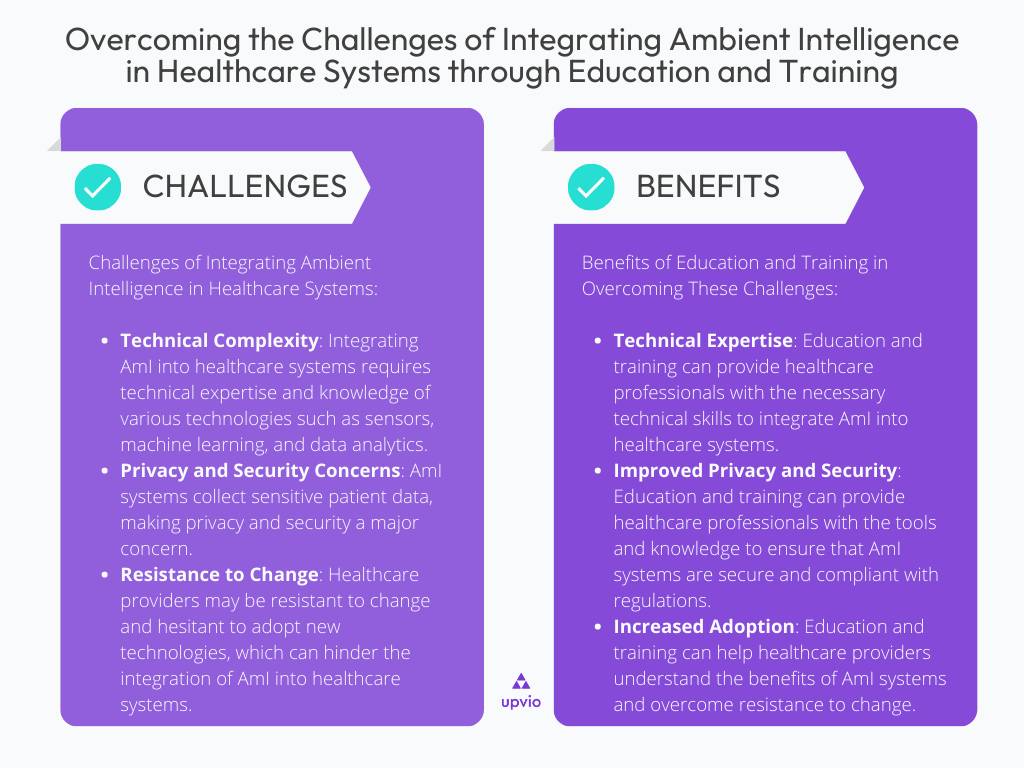
Key Takeaway: Privacy-by-design architecture that eliminates video storage addresses the core data governance concern in contactless monitoring.
Patient Consent and Transparency
Patient consent processes for contactless monitoring require specific considerations beyond standard healthcare consent. Patients need to understand that their camera is being used for health monitoring, what data is collected, and how it differs from video recording. Clear consent flows prevent patient discomfort and regulatory compliance issues.
Upvio's consent interface clearly explains that the camera captures vital signs without recording video. Patients see real-time feedback showing their heart rate detection without feeling surveilled. The consent process includes specific language about contactless monitoring that satisfies regulatory requirements while maintaining patient comfort.
Key Takeaway: Specific consent processes for contactless monitoring must address patient concerns about camera use while meeting regulatory requirements.
Barrier 3: Integration with Existing Clinical Systems
API-First Integration Strategy
Healthcare organizations need contactless monitoring data to flow seamlessly into existing EHRs, patient portals, and clinical workflows. Integration complexity often determines whether pilot programs scale successfully. The challenge isn't just technical connectivity—it's ensuring vital sign data appears in familiar formats within existing clinical interfaces.
One of the potential benefits of contactless monitoring is improved clinical workflow efficiency. By using automated vital sign collection, healthcare providers can focus on patient interaction rather than manual measurement tasks. This can lead to more efficient appointments and improved patient engagement.
Key Takeaway: Integration success depends on making contactless vital signs appear as standard data within existing clinical workflows.
Standardized Data Formats
Vitals AI outputs standard HL7 FHIR-formatted vital sign observations that integrate directly with major EHR systems. Rather than requiring custom integration work, the platform presents contactless measurements using the same data structures as traditional vital sign devices. This approach reduces implementation complexity and ensures data consistency across different monitoring methods.
Key Takeaway: Using standardized healthcare data formats eliminates custom integration requirements and accelerates deployment timelines.
Barrier 4: Environmental Variability and Reliability
Lighting and Environmental Challenges
Contactless monitoring faces unique environmental challenges that don't affect traditional medical devices. Lighting conditions, camera angles, and patient positioning can impact measurement quality. Healthcare organizations need assurance that the technology works reliably across different clinical environments and patient populations.
Key Takeaway: Environmental reliability concerns are specific to contactless monitoring and require targeted technical solutions.
Adaptive Measurement Technology
Vitals AI includes adaptive algorithms that adjust to varying lighting conditions and provide real-time feedback about measurement quality. The system guides users toward optimal positioning and alerts them when environmental conditions may impact accuracy. This approach ensures consistent performance across different clinical settings while maintaining measurement reliability.
Key Takeaway: Adaptive technology that responds to environmental conditions addresses the primary reliability concerns in contactless monitoring deployment.
Real-World Deployment Success
Nephrology Clinic Implementation
Renal care clinics have successfully deployed contactless monitoring to reduce patient contact time while maintaining comprehensive vital sign collection. These implementations demonstrate how addressing each barrier systematically leads to successful scale deployment. Clinical monitoring efficiency improves when environmental and integration challenges are resolved proactively.
Key Takeaway: Successful deployments result from systematically addressing each barrier rather than hoping technology adoption will overcome implementation challenges.
Occupational Health Programs
Occupational health programs use contactless monitoring for routine employee health screenings, demonstrating scalability when deployment barriers are properly addressed. These implementations show how privacy-by-design architecture and clear consent processes enable widespread adoption without employee privacy concerns.
Key Takeaway: Large-scale deployments succeed when privacy, integration, and reliability concerns are addressed during planning rather than after implementation.
Moving from Pilot to Production
Systematic Barrier Assessment
As healthcare organizations evaluate contactless monitoring deployment, success depends on addressing each barrier systematically rather than assuming technology capabilities will overcome implementation challenges. Organizations that conduct thorough barrier assessments before deployment achieve higher success rates and faster scaling.
Upvio's deployment approach focuses on identifying and resolving organization-specific barriers during the planning phase. By working with clinical teams, IT departments, and compliance officers simultaneously, we ensure that contactless monitoring implementations address real operational needs rather than creating new workflow disruptions.
Keep exploring with these related resources:
Discover how Vitals AI captures 20+ health markers in a few seconds.
Get practical tips in Unlock the Benefits of a Healthcare Workflow Platform.
Explore How to Enhance Patient Experience with HIPAA Compliant Chat.
Ready to address deployment barriers in your organization? Talk to an Upvio solutions engineer about your specific implementation requirements and how we can help overcome the barriers to successful contactless monitoring deployment.