REMOTE VITAL SIGNS IN MINING
Make risk visible before incidents happen
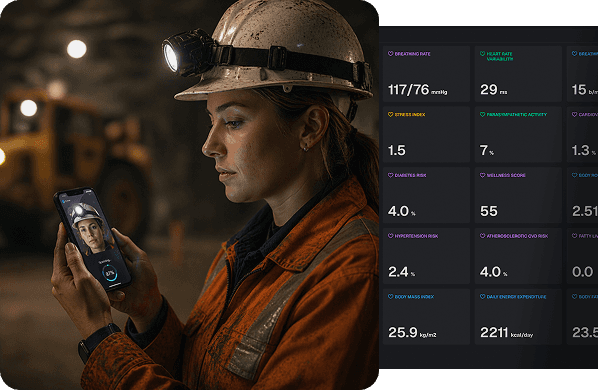
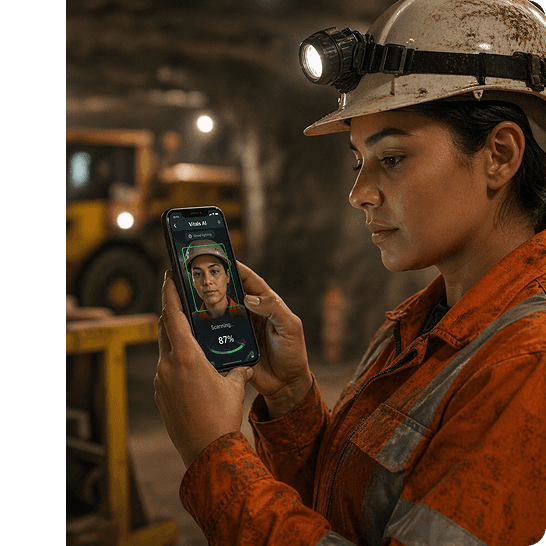
Vitals AI gives mining companies a way to add objective worker-state insights into existing safety workflows using a simple 30-second camera scan.
THE PROBLEM
Limited visibility into worker readiness
Mining companies monitor plant, vehicles and incidents in detail, but human risk is still often invisible until after something goes wrong. Fatigue, heat stress and underlying physiological strain are not always visible in time, yet they sit behind a large share of safety incidents. Current approaches create real operational constraints:
High cost & limited coverage
Manual & subjective assessments
Slow & late detection of risks
THE SOLUTION
From reactive safety to real-time human risk visibility
Full Name
Customizable pre-shift questionnaires
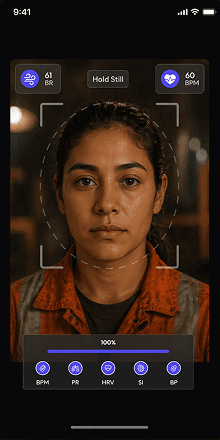
Seamless face scan
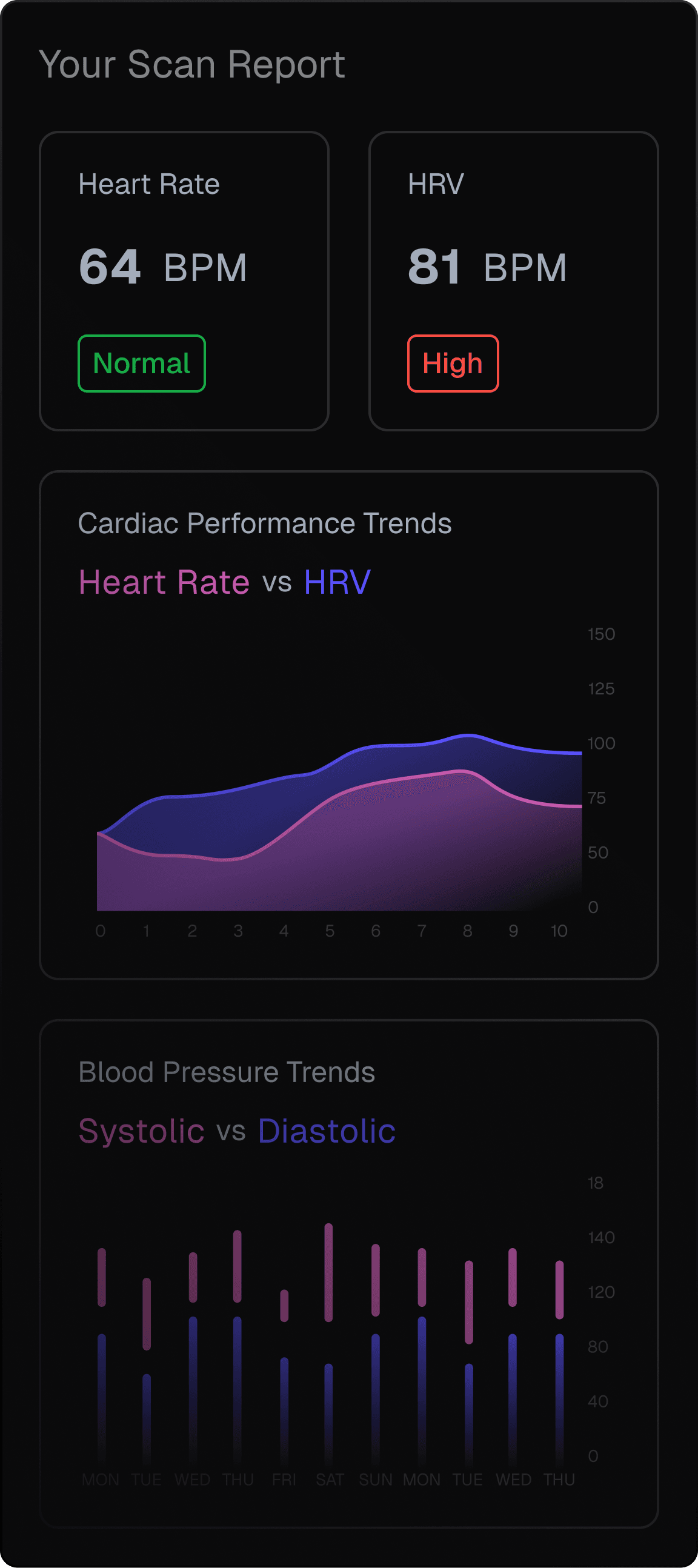
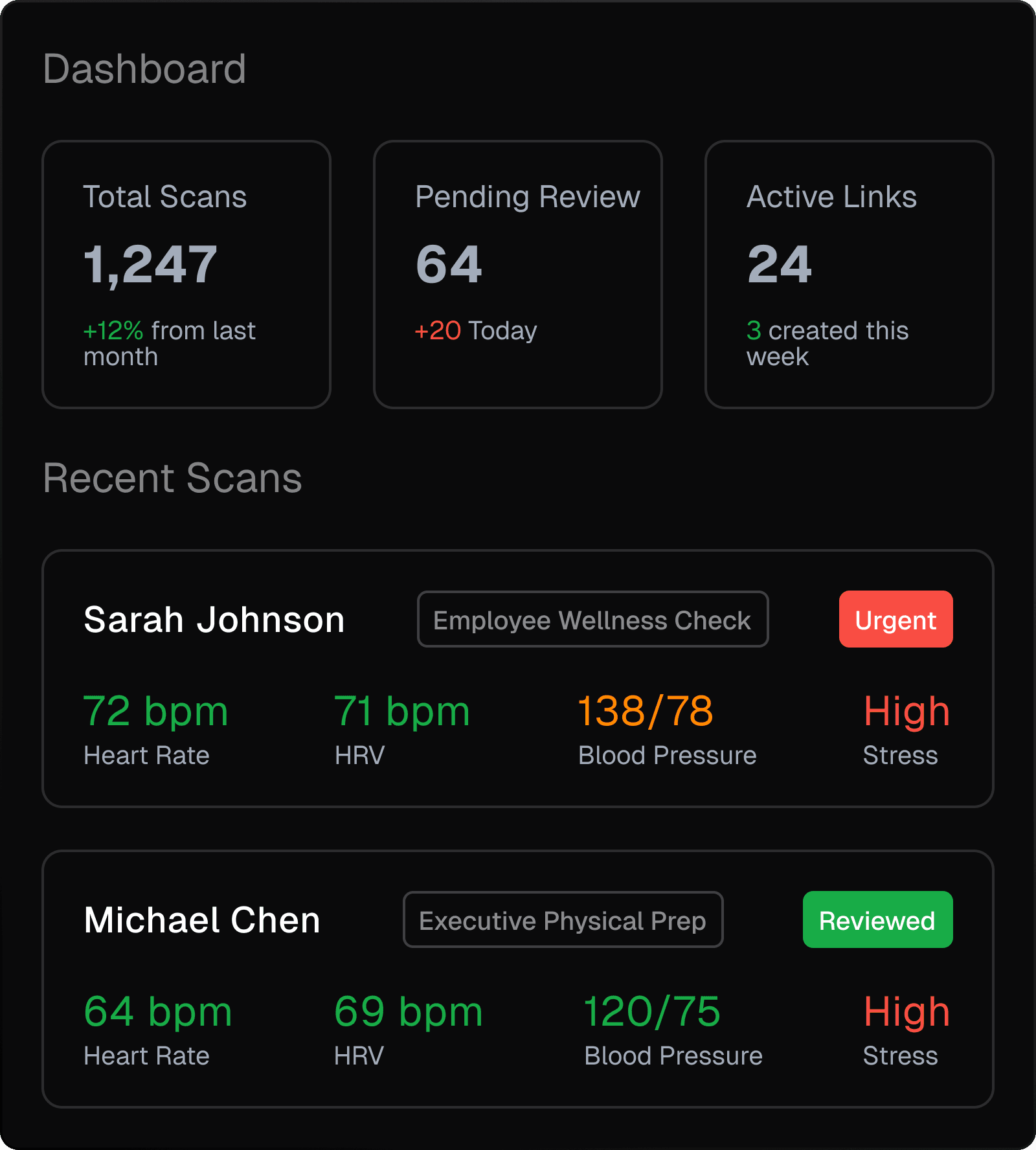
Instant results in your workflow
Built for real mining workflows
Pre-shift readiness checks
On-site spot checks
Incident prevention workflows
Operational fatigue management
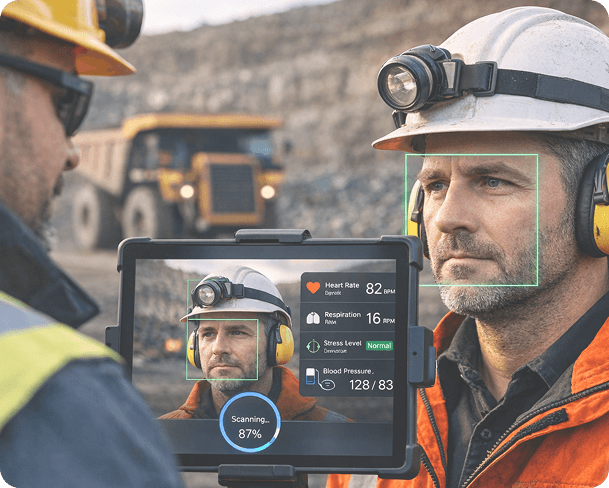
Real impact on teams, performance & cost
Heat and fatigue risk management
Support onsite medical teams
Extend coverage without adding headcount

DEPLOYMENT
Simple to deploy, built for easy adoption
Deploy anywhere
Scan in 30 seconds
Instant results
Track and act
IMPACT
What changes on site
Reduce safety incidents
Reduce reliance on manual screening
Improve usage of onsite medical staff
Improve compliance without wearables
Faster decision-making on site
Lower operational costs
Enterprise-ready governance and protection
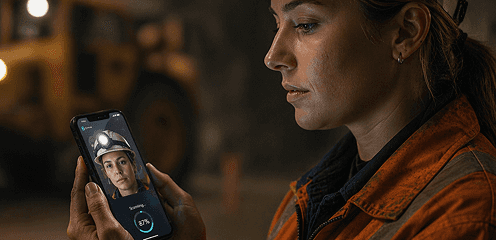
Designed for remote and high-risk sites
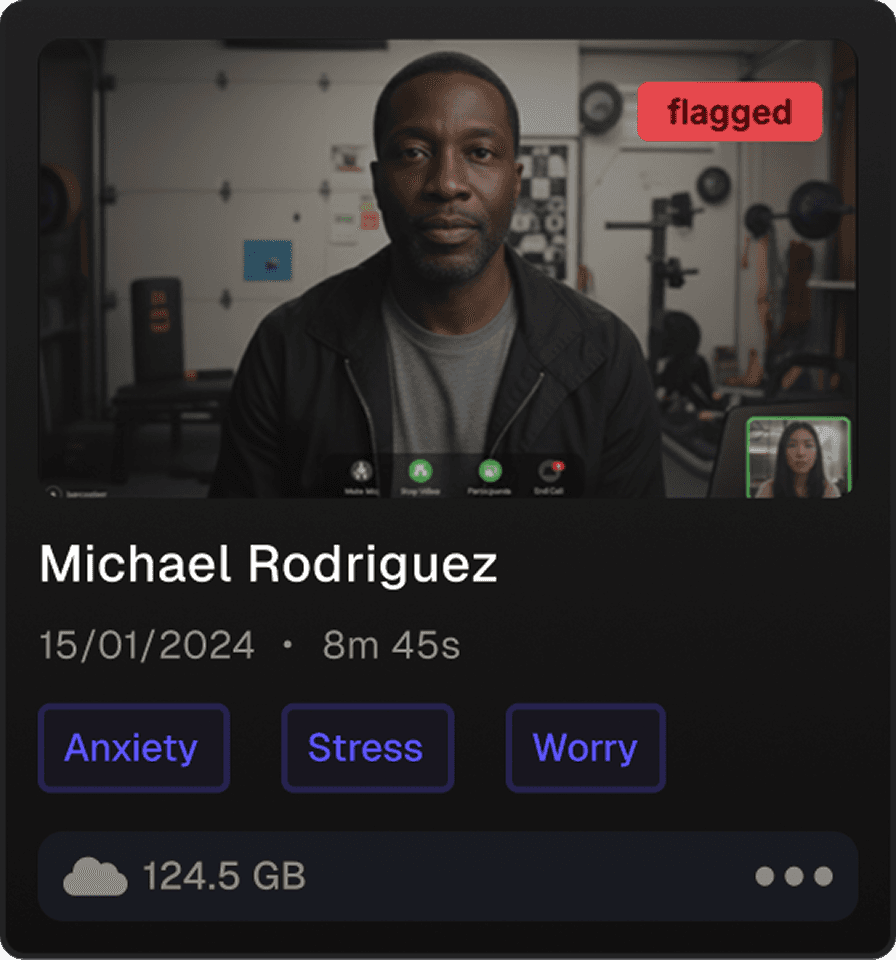
Own your data
Encrypt every scan
TURN-KEY SOLUTION
A fully hosted & compliant turnkey solution






FAQ
How does Vitals AI measure vital signs without any hardware?
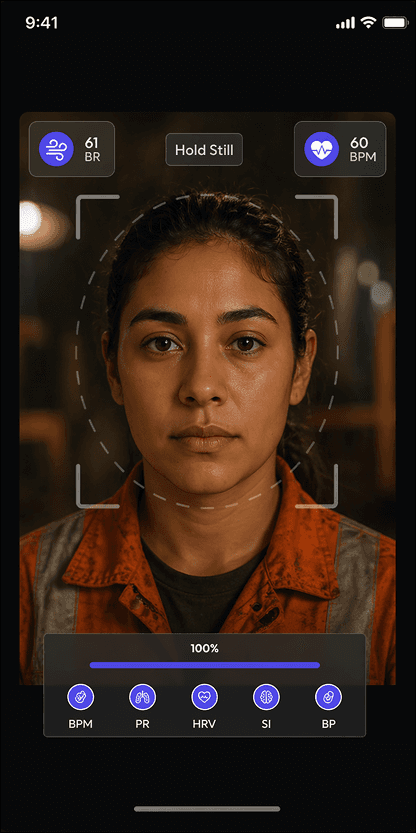
Vitals AI uses the camera on a standard phone or tablet to capture heart rate, heart rate variability, breathing rate, blood pressure wellness trends, and stress indicators. The scan takes under a minute and uses remote photoplethysmography, which detects subtle colour changes in the skin caused by blood flow. No wearables, cuffs, or sensors required.
How accurate is a camera-based scan compared to medical devices?
Vitals AI is powered by clinically-validated rPPG, benchmarked against reference medical devices. In clinical trials it measured heart rate within 0.3 bpm of 12-lead ECG (r = 0.99), HRV within 4.0 ms, and breathing rate within 1.4 bpm from a 30-second scan. That accuracy supports fitness-for-work checks and helps flag fatigue or elevated stress at the start of a shift.
What does a pre-shift scan actually screen for?
Pre-shift scans capture objective vitals like heart rate, blood pressure wellness trends, breathing rate, and stress. Combined with customizable questionnaires covering sleep, medication, and self-reported fatigue, supervisors get a clearer fitness-for-work picture in under a minute per worker.
How quickly can Vitals AI be deployed on site?
Vitals AI can be deployed in minutes. There's no hardware to install, no cloud infrastructure to configure, and no IT overhead. Simply integrate Vitals AI into your pre-shift routines, accessed from a web link, and data flows into your existing systems via API or direct integration.
Does Vitals AI integrate with our existing safety and HR systems?
Yes through a well documented API results flow directly into the dashboards, HRIS, and safety management systems your team already uses. Supervisors don't need to learn new software, and there's no manual data entry between pre-shift checks and your records.
What happens to worker health data?
Your data stays yours. All scans are encrypted end-to-end, stored to enterprise standards, and governed by transparent data ownership policies. We may use de-identified results to improve our models, and we never share identifiable health data with third parties without explicit permission.
How much does Vitals AI cost?
Pricing is based on site size and scan volume, with tiered plans from single-site operations through to global deployments. Contact sales for a tailored quote.
Will workers actually use it?
Adoption is consistently high because the scan is fast, works on their own phone, and doesn't require any extra kit. Workers get visibility into their own health trends over time, which turns pre-shift from a compliance chore into something they see value in.