REMOTE VITAL SIGNS IN TELEMEDICINE
Bring objective data into every consultation
Vitals AI gives telehealth providers a way to add real-time physiological insights into virtual care using a simple 30-second camera scan.
THE PROBLEM
Limited visibility in remote consultations
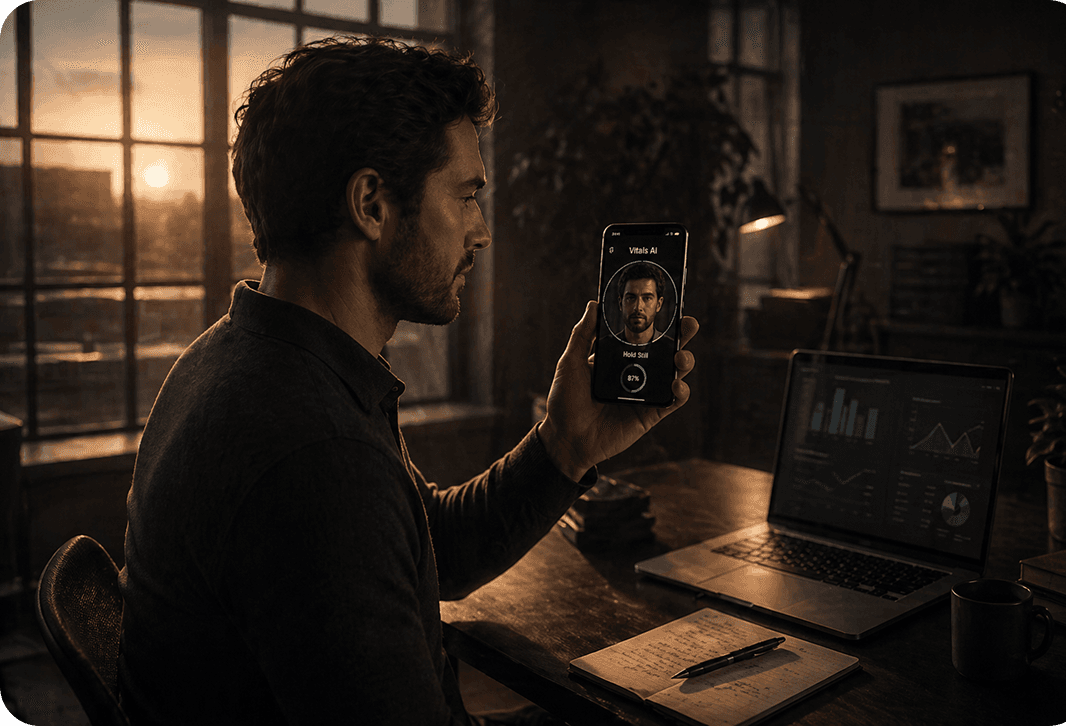
Telehealth has scaled access to care, but clinical visibility has not kept pace. Most remote consultations still rely on patient-reported symptoms, with limited or no objective physiological data available at the point of care. This creates a gap between what patients feel and what clinicians can confidently assess.
Subjective consultations
Limited access to vital signs
Delayed escalation of risk
From subjective input to real-time patient insight
Customizable intake and triage data
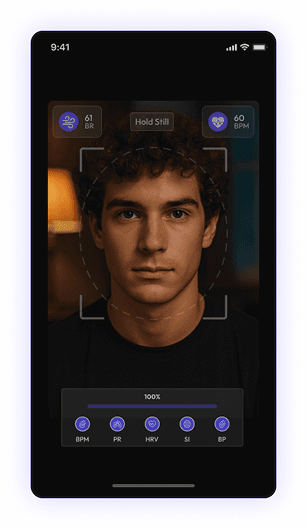
Seamless face scan
Instant results in your EHR
Built for telehealth workflows
Pre-consultation triage
Live consultation support
Remote monitoring workflows
Escalation and referral pathways

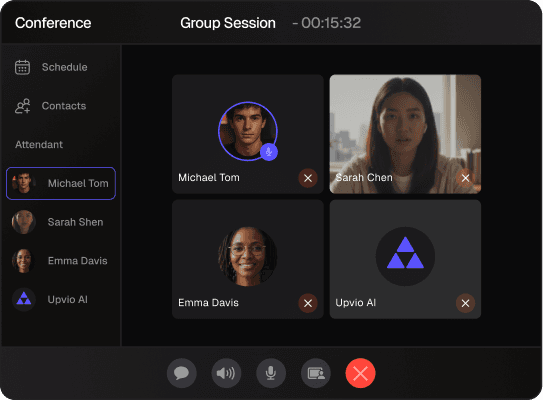
Better care decisions, at scale
Asynchronous care models
Early visibility into wellness signals
Scale care without hardware
Improve patient engagement
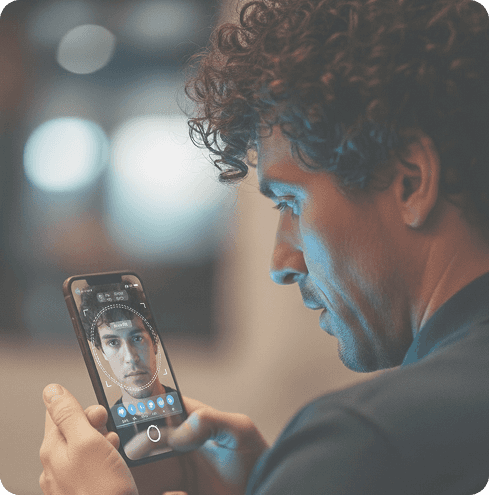

Simple to deploy, built for easy patient experience
Deploy anywhere
Scan in 30 seconds
Instant results
Track and act
IMPACT
What changes in your telehealth experience
Remote consultations shift from subjective conversations to data-informed care. Clinicians enter each interaction with a clearer understanding of patient state, improving speed, confidence, and outcomes. Over time, providers build a richer dataset across patients, enabling better triage, monitoring, and long-term care management.
Improve care quality
Reduce unnecessary escalations
Increase operational efficiency
Expand care access
Faster decision-making
Strengthen remote monitoring programs
SECURITY & DATA
Enterprise-ready governance and protection
Encrypt every signal
Own your data

Designed for remote calls and care
TURN-KEY SOLUTION
A fully hosted & compliant turnkey solution








FAQ
What is contactless vital sign monitoring?
Contactless vital sign monitoring uses a device camera to measure physiological signals such as heart rate, respiratory rate, and stress indicators without sensors or wearables. The technology, known as remote photoplethysmography (rPPG), detects subtle changes in skin color caused by blood flow during a short face scan. In a telehealth context, it lets patients capture wellness signals from any phone, tablet, or laptop, with results available to providers within seconds.
How does Vitals AI work in a telehealth setting?
Vitals AI runs a 30-second face scan on the patient's own device and returns physiological wellness signals into your telehealth platform via API. Patients can scan before a consultation as part of intake, during the call to capture real-time signals, or asynchronously between visits for longitudinal tracking. Data flows into your existing platform, EHR, or PMS so providers see results in their normal workflow.
Is Vitals AI a medical device?
No. Vitals AI is a general wellness tool that provides biometric insights for informational purposes. It is not intended to diagnose, treat, cure, or prevent any disease, and it does not replace professional medical advice or clinical judgment. Health organizations use it to add objective wellness context to virtual care, alongside, not in place of, standard clinical workflows.
What devices and hardware do patients need?
Patients need a smartphone, tablet, or laptop with a working camera and a stable internet connection. No wearables, sensors, app downloads, or accessories are required. The scan runs in the browser, which means it works across operating systems and device generations without IT setup on the patient side.
How does Vitals AI integrate with our telehealth platform or EHR?
Vitals AI integrates via API. Your engineering team can embed the scan flow into your existing patient intake, consultation interface, or patient portal, and route the resulting data into your platform, EHR, or PMS. Integration patterns include pre-consultation triage, in-consultation scans, and asynchronous monitoring between visits. Developer documentation is available at developers.upvio.com.
Is patient data secure and compliant?
Yes. Vitals AI is built to HIPAA, GDPR, and SOC 2 standards, with end-to-end encryption protecting every scan in transit and at rest. Your organization retains ownership of patient data, with audit trails and governance controls built in. The platform is designed to meet enterprise compliance requirements across US, UK, and Australian jurisdictions as well as many others.
Can Vitals AI be used for remote patient monitoring programs?
Vitals AI can support longitudinal wellness tracking between visits, giving providers visibility into trends over time across patient cohorts. Whether a specific deployment qualifies as remote patient monitoring under regulatory frameworks like CMS RPM in the US depends on your clinical setup, billing model, and how the data is used. Health orgs typically use Vitals AI as a wellness data layer that complements their existing monitoring or care management programs.