AI Health Monitoring Privacy: What Procurement Teams Ask
This guide addresses critical privacy and compliance questions procurement teams ask when evaluating AI health monitoring vendors. It covers privacy-by-design principles, regulatory compliance frameworks including HIPAA and GDPR, and security architecture considerations for contactless vital sign monitoring platforms.
When your procurement team evaluates AI health monitoring vendors, privacy and compliance questions dominate the conversation. As healthcare organizations increasingly adopt contactless vital sign monitoring and emotion recognition technologies, security teams need clear answers about data handling, regulatory compliance, and risk mitigation. This article addresses the key privacy-by-design principles that should guide your vendor selection process.
Privacy-by-Design in AI Health Monitoring: Core Principles
Privacy-by-design in AI health monitoring means building data protection into the technology architecture from the ground up, not as an afterthought. For contactless vital sign monitoring platforms like Upvio's Vitals AI, this translates to fundamental design decisions that minimize data exposure and eliminate unnecessary storage.
The most critical principle is real-time processing with no video storage. When a patient uses their smartphone camera to measure heart rate, blood pressure, or respiratory rate, the video stream is processed in real-time and immediately discarded. No video files are stored on devices or servers, eliminating the largest potential attack surface and privacy risk.
This approach differs significantly from traditional mobile health apps that may store biometric data or video recordings. By processing data at the edge and retaining only the extracted vital sign measurements, AI health monitoring platforms can deliver clinical-grade accuracy while maintaining minimal data footprint.
What Your Security Team Will Ask: The Procurement Questionnaire
Based on hundreds of enterprise evaluations, procurement teams consistently ask these privacy and security questions:
Data Storage: What video or biometric data is stored, and where?
Processing Location: Is data processed locally or transmitted to external servers?
Encryption Standards: What encryption protocols protect data in transit and at rest?
Compliance Certifications: What regulatory frameworks does the vendor comply with?
Access Controls: Who can access patient data and under what circumstances?
Data Retention: How long is data retained and what is the deletion process?
Further Reading:
Balancing Technology and Empathy in Digital Patient Experience
Addressing Healthcare Disparities with Remote Care: Bridging the Gap
Fair Reimbursement for Remote Care: Navigating Healthcare Models
Regulatory Compliance Framework
AI health monitoring platforms must navigate multiple regulatory frameworks simultaneously. Understanding compliance requirements helps procurement teams assess vendor readiness and implementation timelines.
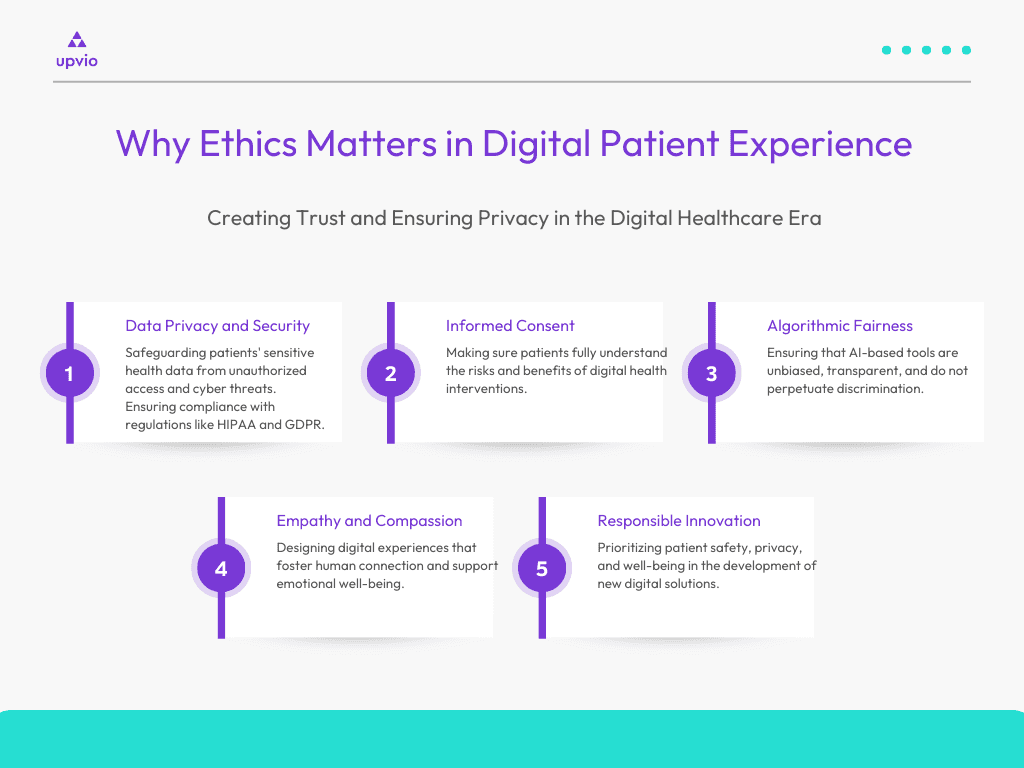
HIPAA Compliance for AI Health Monitoring
HIPAA compliance in AI health monitoring extends beyond traditional healthcare IT requirements. Key considerations include:
Minimum Necessary Standard: AI platforms should collect only the data necessary for vital sign extraction. Contactless monitoring that processes video streams without storage inherently supports this principle.
Business Associate Agreements: Vendors must execute comprehensive BAAs that address AI-specific data processing, including algorithm training and model updates.
Technical Safeguards: End-to-end encryption, access controls, and audit logging must extend to AI processing pipelines and model inference systems.
GDPR Considerations for Global Deployments
For organizations with international operations, GDPR compliance adds additional requirements:
Lawful Basis for Processing: AI health monitoring typically relies on consent or legitimate interest. Clear consent mechanisms must explain how biometric data is processed.
Data Subject Rights: Patients must be able to access, correct, or delete their health data. Real-time processing architectures simplify compliance by minimizing stored data.
Privacy Impact Assessments: AI health monitoring platforms require DPIA documentation, particularly for biometric processing and emotion recognition capabilities.
Security Architecture and Risk Mitigation
Minimizing Attack Surface Through Design
Traditional wearable devices create multiple potential attack vectors through Bluetooth connections, stored data, and device firmware. Contactless AI monitoring eliminates these risks by:
No Wearable Hardware: Camera-based monitoring removes the need for connected devices that can be compromised or lost.
Edge Processing: Local processing reduces data transmission and eliminates cloud storage vulnerabilities for sensitive biometric data.
Stateless Architecture: Real-time processing without persistent storage means there's no database of biometric data to breach.
Encryption and Data Protection
End-to-end encryption must cover the entire data pipeline:
Device to Platform: All vital sign measurements transmitted from devices to healthcare systems must use TLS 1.3 or equivalent encryption.
API Security: Integration with electronic health records requires OAuth 2.0 authentication and encrypted API endpoints.
Data at Rest: Any stored vital sign measurements must use AES-256 encryption with proper key management.
Compliance Certifications and Audits
Enterprise procurement teams require third-party validation of security controls:
SOC 2 Type II: Demonstrates operational effectiveness of security controls over time.
ISO 27001: International standard for information security management systems.
HITRUST: Healthcare-specific security framework that maps to multiple regulatory requirements.
Consent and Transparency in AI Health Monitoring
Informed Consent for Biometric Processing
AI health monitoring requires specific consent considerations beyond traditional healthcare consent:
Algorithm Transparency: Patients should understand how their biometric data is processed to generate vital sign measurements.
Data Usage Scope: Clear explanation of whether biometric data is used for individual care, population health analytics, or algorithm improvement.
Withdrawal Rights: Patients must be able to withdraw consent and understand the implications for their care.
Clinical and Legal Requirements
Consent in AI health monitoring is not optional—it's a clinical and legal requirement that serves multiple purposes:
Patient Autonomy: Respects patient rights to control their biometric data and understand how it's processed.
Legal Protection: Provides legal basis for biometric processing under privacy regulations.
Clinical Trust: Builds patient confidence in AI-driven care delivery and remote monitoring programs.
Healthcare providers should obtain consent in a clear and unambiguous manner, ensuring patients understand the nature and purpose of the AI health monitoring technology and how their biometric data will be processed.
Implementation Best Practices
Vendor Evaluation Criteria
Privacy-by-Design Architecture: Evaluate whether the vendor's technical architecture minimizes data collection and storage by design.
Compliance Documentation: Request current compliance certifications, audit reports, and regulatory gap analyses.
Data Processing Transparency: Understand exactly what data is collected, how it's processed, and what is retained.
Risk Assessment Framework
Data Flow Mapping: Document how biometric data flows through the AI monitoring system from capture to disposal.
Threat Modeling: Identify potential attack vectors specific to AI health monitoring, including model poisoning and inference attacks.
Incident Response: Establish procedures for responding to potential biometric data breaches or AI system compromises.
Ongoing Compliance Management
Regular Audits: Conduct periodic assessments of vendor compliance and security controls.
Contract Management: Ensure vendor agreements include specific privacy and security requirements for AI processing.
Staff Training: Educate clinical and technical staff on privacy considerations specific to AI health monitoring.
Further Reading:
FAQs
How does contactless vital sign monitoring protect patient privacy?
Contactless monitoring processes video streams in real-time without storing video files. Only the extracted vital sign measurements are retained, eliminating the largest potential privacy risk.
What compliance certifications should AI health monitoring vendors have?
Look for HIPAA compliance, SOC 2 Type II certification, and ISO 27001 certification. HITRUST certification provides additional assurance for healthcare-specific security requirements.
How is consent handled for AI biometric processing?
Patients must provide informed consent that specifically addresses biometric data processing, algorithm use, and data retention policies. Consent must be granular and withdrawable.
Conclusion
Privacy-by-design in AI health monitoring represents a fundamental shift from traditional healthcare IT security models. By processing biometric data in real-time without storage, implementing end-to-end encryption, and maintaining comprehensive compliance frameworks, AI health monitoring platforms can deliver clinical value while minimizing privacy risks.
For procurement teams evaluating AI health monitoring vendors, the key is understanding how privacy protection is built into the technology architecture, not added as an afterthought. Vendors that can demonstrate real-time processing, minimal data retention, and comprehensive compliance documentation are better positioned to support enterprise healthcare deployments.
Upvio's Vitals AI platform exemplifies privacy-by-design principles through real-time video processing without storage, end-to-end encryption, and comprehensive regulatory compliance frameworks. By choosing AI health monitoring solutions that prioritize privacy from the ground up, healthcare organizations can deploy contactless vital sign monitoring with confidence in their data protection and regulatory compliance posture.
More related content you might find useful:
Explore Vitals AI for remote, camera-based vital signs monitoring.
Discover The EMR Dilemma: Hosted vs. Non-Hosted Points of Care Comparison.
Read more in AI in Medicine: Modern Diagnostic and Treatment Application.
Dive deeper with Why Your Facial Recognition Software Misreads Emotions.