Ambient Health Intelligence: The Room Becomes the Monitor
Ambient health intelligence enables continuous vital sign monitoring through existing room cameras and computer vision, eliminating the need for patient interaction with monitoring devices. This technology transforms clinical environments into passive monitoring systems, offering applications across ICUs, recovery rooms, aged care facilities, and telehealth settings while addressing privacy and workflow integration challenges.

Ambient health intelligence represents the next evolution in clinical monitoring — where the environment itself becomes the observer. Rather than requiring patients to actively engage with monitoring devices, ambient systems use existing infrastructure like room cameras to continuously assess vital signs through advanced computer vision and remote photoplethysmography (rPPG). This shift from active to passive monitoring opens new possibilities for continuous health assessment in clinical settings.
From Active Monitoring to Ambient Intelligence
Traditional vital sign monitoring requires direct patient interaction — blood pressure cuffs, pulse oximeters, or manual measurements by clinical staff. Even modern contactless solutions like Upvio's Vitals AI typically require patients to position themselves in front of a camera and remain still for a brief scanning period.
Ambient monitoring fundamentally changes this paradigm. Instead of "patient initiates scan," the model becomes "environment continuously observes." Standard room cameras, enhanced with rPPG algorithms, can detect subtle color changes in exposed skin that correlate with heart rate, respiratory patterns, and other physiological markers — all without any patient action required.
This represents a significant advancement in clinical workflow efficiency. Healthcare providers can access continuous vital sign data without interrupting patient care or requiring additional staff time for manual measurements.
Clinical Applications for Ambient Vital Monitoring
The potential applications for ambient health intelligence span multiple care settings, each with distinct monitoring requirements and patient populations.
Intensive Care Units
ICU environments already feature extensive monitoring infrastructure. Ambient vital sign detection can supplement existing systems, providing redundant measurements and filling gaps when traditional monitors are temporarily disconnected or malfunctioning. The continuous, non-contact nature makes it particularly valuable for patients with sensitive skin or those requiring frequent repositioning.
Post-Operative Recovery
Recovery rooms benefit from ambient monitoring's ability to track patients without additional device attachment. As patients transition from anesthesia, ambient systems can provide early detection of respiratory depression or cardiovascular instability while allowing natural movement and positioning.
Aged Care Facilities
Long-term care settings present unique challenges for traditional monitoring. Elderly residents may forget to use devices or find wearables uncomfortable. Ambient monitoring integrated into common areas and private rooms can provide continuous health assessment without requiring resident compliance or memory.
Telehealth Integration
Home-based ambient monitoring extends clinical observation beyond the healthcare facility. Patients participating in remote monitoring programs could have ambient systems in their living spaces, providing clinicians with longitudinal vital sign data between scheduled consultations.
Technical Infrastructure and Implementation
Ambient vital monitoring leverages existing camera infrastructure enhanced with specialized computer vision algorithms. The core technology — remote photoplethysmography — analyzes subtle color variations in facial regions that correspond to blood volume changes with each heartbeat.
Modern implementations can extract multiple vital signs simultaneously: heart rate, respiratory rate, and indicators of blood pressure variability. Advanced algorithms can also assess stress levels through heart rate variability analysis and detect irregular cardiac rhythms.
The computational requirements are manageable with current hardware. Edge processing capabilities allow real-time analysis without requiring constant cloud connectivity, addressing latency concerns and reducing bandwidth requirements in clinical environments.
Privacy and Consent in Ambient Clinical Monitoring
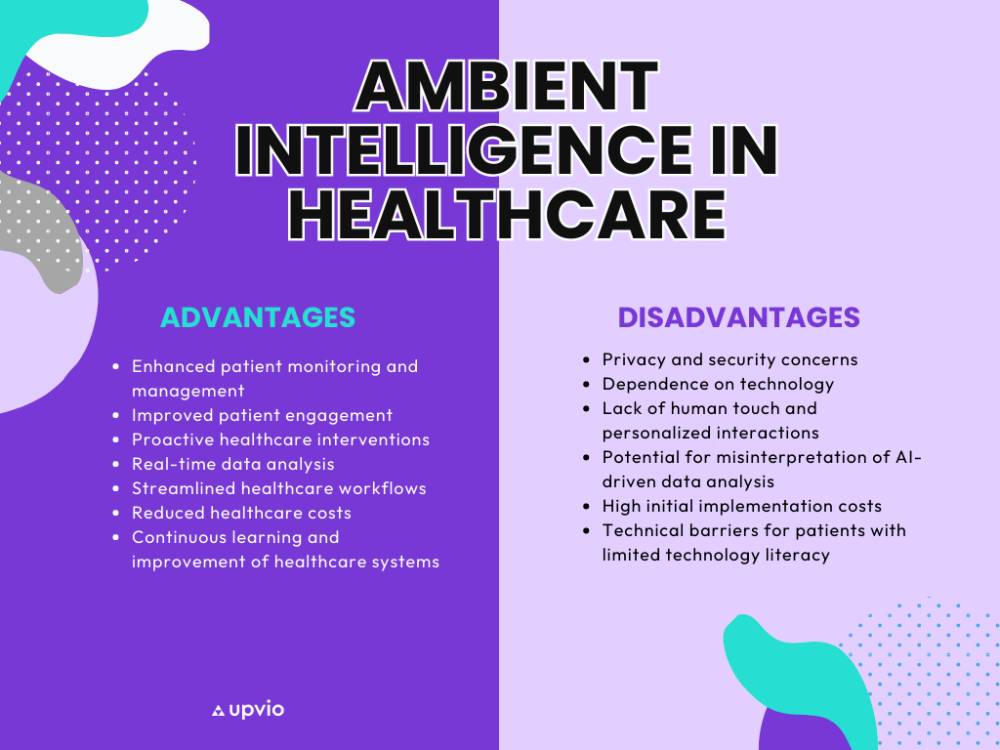
Ambient monitoring raises important considerations around patient privacy and informed consent. Unlike traditional monitoring where patients actively engage with devices, ambient systems observe continuously and passively.
Clinical implementations require clear consent frameworks that address continuous observation, data retention policies, and patient rights to opt-out or request monitoring pauses. Healthcare organizations must establish protocols for handling ambient monitoring data that align with HIPAA requirements and institutional privacy policies.
Technical safeguards include on-device processing to minimize data transmission, automatic deletion of video data after vital sign extraction, and role-based access controls for monitoring dashboards. These measures help balance clinical utility with patient privacy expectations.
Integration with Clinical Workflows
Successful ambient monitoring implementation requires thoughtful integration with existing clinical information systems. Vital sign data must flow seamlessly into electronic health records, trigger appropriate clinical alerts, and support clinical decision-making without creating alert fatigue.
The continuous nature of ambient data presents both opportunities and challenges. Clinicians gain access to trend data and can identify gradual changes that might be missed with periodic manual measurements. However, systems must intelligently filter and prioritize alerts to avoid overwhelming clinical staff with non-actionable information.
Machine learning algorithms can help identify clinically significant changes while suppressing false alarms caused by patient movement, lighting changes, or other environmental factors.
The Future of Ambient Health Intelligence
Ambient monitoring represents an early step toward truly intelligent clinical environments. Future developments may include multi-modal sensing that combines visual monitoring with audio analysis for respiratory assessment, environmental sensors for context awareness, and predictive analytics that identify deterioration patterns before traditional vital sign changes become apparent.
The integration of ambient monitoring with other AI-driven clinical tools — such as Upvio's Empathic AI for emotion recognition — could provide comprehensive patient assessment that includes both physiological and psychological states. This holistic approach to patient monitoring aligns with growing recognition of mental health's impact on physical recovery and overall outcomes.
As ambient intelligence matures, we anticipate seeing deployment in increasingly diverse clinical settings, from emergency departments where rapid triage assessment is critical, to outpatient clinics where efficient vital sign collection can improve throughput and patient satisfaction.
Upvio's Vision for Ambient Monitoring
Upvio's Vitals AI platform currently enables contactless vital sign monitoring through smartphone and device cameras, requiring brief patient positioning for accurate measurements. Our roadmap includes ambient monitoring capabilities that extend this technology to continuous, passive observation.
The transition from active to ambient monitoring builds on our existing rPPG algorithms and computer vision expertise. By leveraging standard room cameras and edge computing infrastructure, we're developing solutions that can transform any clinical space into an intelligent monitoring environment.
Our approach prioritizes clinical workflow integration and patient privacy. Ambient monitoring systems will integrate seamlessly with existing clinical information systems while maintaining the security and compliance standards healthcare organizations require.
Conclusion
Ambient health intelligence represents a fundamental shift in how we approach clinical monitoring. By transforming the environment itself into a monitoring system, we can achieve continuous patient assessment without the limitations of traditional devices or the compliance challenges of wearable technology.
The clinical applications span multiple care settings, from intensive care units requiring redundant monitoring to aged care facilities where traditional approaches may be impractical. As the technology matures, ambient monitoring will become an integral component of intelligent clinical environments.
For healthcare organizations considering ambient monitoring deployment, the key considerations include technical infrastructure requirements, clinical workflow integration, and privacy framework development. Organizations that begin planning now will be positioned to leverage ambient intelligence as it becomes more widely available.
Ready to explore ambient monitoring for your clinical environment? Talk to us about ambient monitoring deployment and learn how Upvio's Vitals AI can transform your approach to patient monitoring.
Recommended next reads:
Discover how Vitals AI captures 20+ health markers in a few seconds.
Read more in What is a HIPAA Violation? Updated for 2024.
Explore Understanding PHI: Protected Health Information Explained.
Dive deeper with Understanding the Types of HIPAA Violations and Associated Penalties.
Learn more about Two-Way SMS vs Secure Messaging: Which Offers Better Patient Engagement.