Can a Phone Camera Measure Heart Rate?
Yes, modern smartphone cameras can accurately measure heart rate using remote photoplethysmography (rPPG).
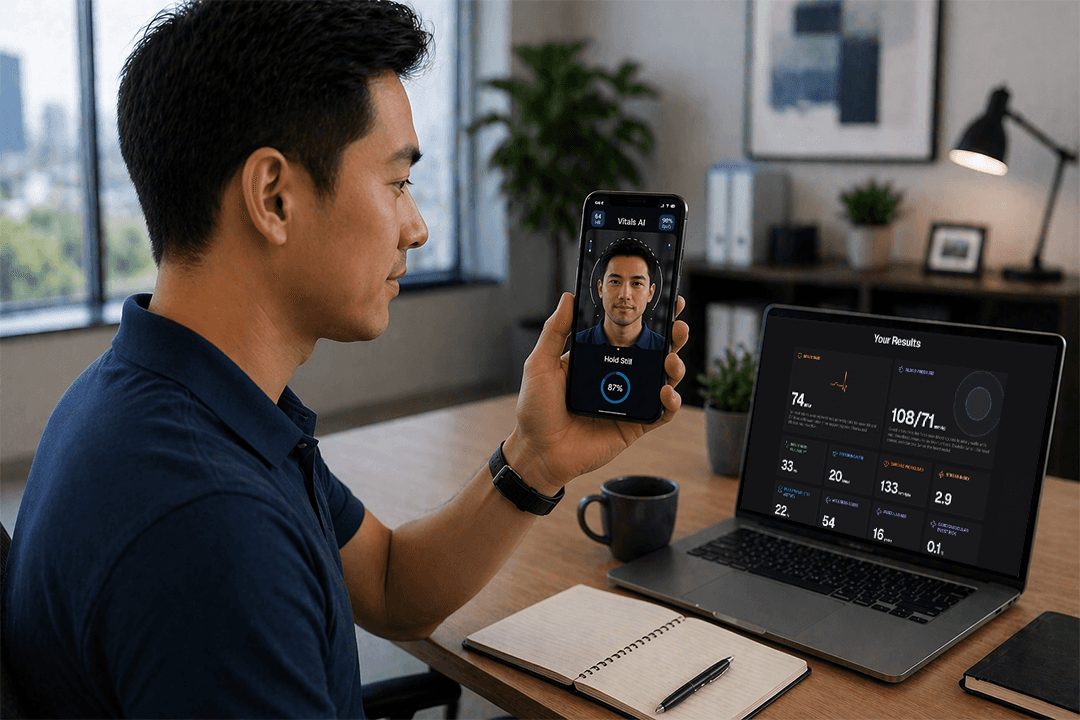
Yes, modern smartphone cameras can accurately measure heart rate using remote photoplethysmography (rPPG). This technology detects subtle skin color changes caused by blood flow, allowing for medical-grade vital sign monitoring without physical contact. Using existing sensors already in mobile devices, scalable health screenings can be implemented.
How does rPPG technology work on a standard camera?
The concept of measuring vitals through a lens is rooted in a science called remote photoplethysmography (rPPG). Every time the heart beats, blood is pumped through the body, causing tiny, fluctuations (invisible to the eye) in light absorption on the skin surface.
Smartphone cameras are equipped with high-resolution sensors capable of capturing these minute changes in the red, green, and blue light spectrum. By analyzing the "green" channel specifically, where hemoglobin absorption is most prominent, rPPG algorithms can calculate a pulse rate that rivals traditional pulse oximeters in accuracy.
This shift from hardware-dependent monitoring to software-driven solutions allows organizations to implement a contactless vital signs solution using devices that employees already carry in their pockets.
Is a phone camera measure heart rate accurate enough for professional use?
Accuracy in rPPG has reached a level where it is no longer a novelty but a reliable tool for enterprise-grade risk management. Clinical studies, such as those archived by the National Institutes of Health (NIH), have demonstrated that rPPG technology can maintain a mean absolute error of less than 3 beats per minute compared to ECG leads.
Maintaining high standards is essential for professional applications, and you can explore more in our guide on vitals data quality. For high-stakes environments, this level of precision is sufficient to identify "red flag" health indicators. By deploying remote health screening, organizations can identify signs of cardiovascular strain or extreme fatigue before a worker begins a high-risk task. This proactive approach ensures that personnel are fit for duty without the need for cumbersome medical equipment or manual testing procedures.
What are the benefits of moving from wearables to a contactless vital sign solution?
Traditional wearables often face friction in professional environments. They require constant charging, manual syncing, and can be uncomfortable or even hazardous in manual labor settings. A software-based approach eliminates these hardware bottlenecks through superior scalability and hygiene. For a deeper dive into the specific advantages, see our detailed comparison between rPPG and traditional hardware.
Feature | Wearable Sensors (IoT) | Contactless rPPG Solution |
Hardware Requirement | Specific wristbands or chest straps | Existing smartphone/tablet cameras |
Maintenance | Regular charging and cleaning | No maintenance (software-only) |
Scalability | High cost per user (1 device per person) | Low cost (unlimited users via app) |
Sanitation | Risk of skin irritation or pathogen spread | 100% touchless and hygienic |
Deployment | Physical distribution and logistics | Instant digital download/link |
Safety | Potential "snag hazard" in manual labor | Zero physical profile |
Mastering rPPG Technology and Remote Health Screening
Can a phone camera measure heart rate in low light?
While rPPG technology relies on light absorption, modern algorithms can function in relatively low-light environments by utilizing the camera's ability to adjust ISO settings. For the most consistent results in a professional setting, a well-lit environment or the activation of the phone's built-in flash ensures the sensor captures the necessary color fluctuations clearly.
Is health data private when using a camera-based solution?
Security is a cornerstone of professional rPPG technology. Reputable solutions process the video feed in real-time on the device itself, often referred to as "on-edge processing." The video pixels are converted into numerical data points, and the video frames are discarded immediately. This ensures that no actual video of the user is ever stored or transmitted.
Does skin tone affect the accuracy of the measurement?
Early iterations of optical heart rate monitoring faced challenges with darker skin tones due to different light absorption levels. However, advanced contactless solutions now utilize multi-wavelength analysis and AI-driven compensation to ensure high accuracy across all Fitzpatrick skin types, making it a reliable tool for a diverse global population.
Can this technology detect more than just heart rate?
Yes. Beyond pulse, advanced remote health screening tools can measure oxygen saturation (SpO2), respiration rate, and even Heart Rate Variability (HRV). This provides a comprehensive view of an individual’s physiological state and stress levels in under 60 seconds.
Does the user need to stay perfectly still for a reading?
Significant movement can introduce "noise" into the optical signal. However, modern software includes sophisticated motion compensation algorithms that allow for slight natural movements. For a professional-grade screening, sitting relatively still for 30 seconds ensures the highest quality and most reliable data.