Device-Free Remote Patient Monitoring: What Data Shows
Discover how remote patient monitoring without devices utilizes camera-based sensors for frictionless, secure health tracking at scale.
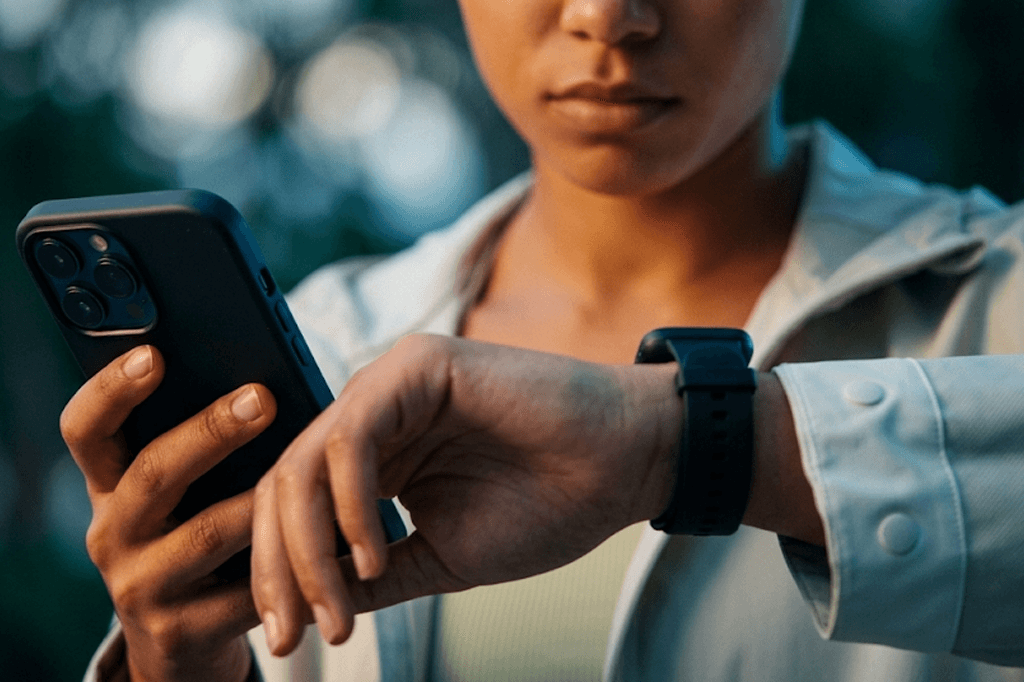
The landscape of health intelligence is undergoing a significant paradigm shift as organizations seek ways to monitor human wellness efficiently, accurately, and at scale. For years, wearable devices like smartwatches and medical patches dominated the discussion around continuous data collection. However, recent real-world data highlights critical systemic challenges facing wearable hardware, including low user compliance, lack of data sharing, and significant logistics overhead. At the same time, innovations in optical physics and computer vision have introduced a viable alternative: software-based monitoring that requires no physical hardware. This analysis reviews the latest research comparing wearable and wearable-free monitoring setups, exploring how camera-based systems capture medical-grade biometric trends to deliver friction-free, location-independent care.
Why are industries moving away from physical wearable hardware?
While wearable devices have grown in popularity for personal fitness tracking, looking at their performance across broader institutional deployments reveals significant operational limitations. The most prominent barrier to the success of wearables is user compliance. Research shows that hardware-centric tracking places a continuous behavioral burden on individuals, who must regularly charge the hardware, maintain proper skin contact, and remember to wear the equipment.
Data published by organizations like DeviceLab notes that while continuous tracking offers immense value over static snapshots, physical factors like skin irritation from adhesives and the bulkiness of standard devices frequently cause users to abandon their tracking routines.
Furthermore, data silos present a major challenge when hardware is deployed at scale. A clinical study conducted by the Ohio State University Wexner Medical Center found that approximately 75% of individuals who track their health metrics using wearable hardware fail to share that data with their health professionals or overseeing organizations. This massive gap occurs because the information is frequently trapped inside proprietary consumer applications or requires manual data extraction. For industries aiming to run seamless remote health screening protocols, relying on a system where three-quarters of the collected data goes unseen is highly inefficient.
Beyond user adherence and data sharing, the logistical overhead of provisioning, shipping, sanitizing, and replacing physical assets adds substantial financial strain. Hardware degrades, batteries lose capacity, and supply chains introduce unavoidable delays. These frictions have forced technical architects and operational leaders to seek more scalable, software-defined infrastructure.
How does camera based health monitoring capture vitals without contact?
The primary technology enabling remote patient monitoring without devices is Remote Photoplethysmography (rPPG). This software-driven methodology transforms standard camera sensors found in everyday smartphones, tablets, and laptops into high-precision diagnostic tools.
The core mechanism relies on an optical phenomenon known as the "micro-blush." Every time the heart pumps blood through the body, blood volume changes in the facial capillaries. These rapid volume changes alter the amount of ambient light reflected off the surface of the skin. While these minute color variations are entirely invisible to the human eye, standard digital camera sensors can capture them across specific light wavelengths, particularly within the green light spectrum.
Modern computer vision platforms isolate specific regions of interest on the face and monitor these microscopic pixel changes over time. Advanced machine learning algorithms then filter out environmental noise - such as minor head movements, speech, or shifting room illumination - to extract a clean pulse waveform. Within 30 to 60 seconds, this optical waveform is translated into real-time health metrics, including:
Heart rate and heart rate variability (HRV)
Respiratory rate
Blood oxygen saturation (SpO_2)
Estimates of systolic and diastolic blood pressure
By analyzing the precise shape of the pulse wave and the Pulse Transmit Time (PTT), these software engines deliver high correlation rates with traditional cuff-based or contact-based sensors, as validated in peer-reviewed literature indexed on PubMed Central. This allows organizations to build workflows around contactless vital signs without the need to distribute a single piece of tracking hardware.
Is software-based biometric tracking secure enough to use?
Transitioning from physical devices to camera-based platforms naturally raises questions regarding data protection and user privacy. However, engineering frameworks built around modern rPPG applications utilize a "secure by design" architecture that offers superior privacy controls compared to traditional cloud-connected consumer wearables.
Unlike standard video streaming or facial recognition setups, camera-based health tracking does not identify who the user is; it evaluates how the user is doing. The underlying data flow follows strict privacy principles:
Local Processing: The live video feed is captured and processed entirely in the temporary memory (RAM) of the local device.
Zero Storage: The video recording is never saved to a local hard drive, nor is it ever transmitted across a network to an external cloud server.
Instant Deletion: Once the mathematical algorithm extracts the necessary pulse waveform, the video pixels are immediately purged from the system memory.
Numerical Output Only: The only data payload that is saved or integrated into external enterprise platforms is the final numerical result (for example, a pulse rate of 72 BPM).
This ephemeral processing pipeline prevents the creation of biometric video databases, making the technology highly compatible with strict global data regulations, such as GDPR and HIPAA guidelines.
What does the comparative data reveal about deployment scalability?
When choosing between a hardware-dependent framework and software-defined remote health screening, organizations must weigh the trade-offs between continuous long-term tracking and instantaneous, wide-scale visibility.
Factor | Wearable Hardware Tracking | Camera-Based Monitoring (rPPG) |
Hardware Dependency | High (Requires dedicated physical devices) | None (Utilizes existing consumer cameras) |
User Compliance | Low (Dependent on charging and user behavior) | High (Requires minimal friction or setup) |
Data Accessibility | Fragmented (Trapped in proprietary app silos) | Seamless (Direct API integration into enterprise tools) |
Deployment Speed | Slow (Limited by physical logistics and shipping) | Instant (Deployed via web browsers or native software updates) |
Cost Scalability | Linear (Costs scale directly with the number of users) | Exponential (Low incremental cost per additional user) |
Data from enterprise tracking environments indicates that while a physical patch or watch is highly effective for capturing multi-day continuous data (such as mapping sleep architecture or multi-day Holter monitoring), it fails when applied to population-wide screenings.
Software-based vitals capture, by contrast, removes the physical supply chain entirely. A user simply looks at their screen during a routine check-in, an automated assessment occurs, and the metrics route directly to the designated dashboard. This makes the architecture uniquely optimized for widespread, cross-industry implementation.
Contactless Vital Signs & Camera Based Health Monitoring: Expert Insights
Does camera-based health monitoring work effectively across all skin tones?
Yes. Melanin absorbs more light, which can naturally reduce signal strength. High-quality rPPG platforms resolve this by utilizing chrominance-based algorithms and adaptive signal amplification. The software isolates the dynamic, cyclical color changes caused by blood flow independently from static skin tone, ensuring consistent measurement accuracy across diverse demographics.
Can a camera accurately estimate blood pressure without a pressure cuff?
Camera-based systems provide reliable estimates by evaluating the velocity, morphology, and Pulse Transmit Time of the optical waveform. While these readings do not replace mechanical cuffs for acute diagnostic emergencies, peer-reviewed clinical data shows they deliver precise trend lines perfect for general wellness monitoring and scale screening.
What environmental conditions are required for an accurate camera scan?
The primary requirement is stable, adequate ambient lighting (minimum 150 lux, standard for an indoor room). Users should avoid direct, harsh backlighting—like sitting immediately in front of a bright window—which can wash out camera pixels. The user must also remain relatively still and sit 30 to 100 centimeters away from the lens for the 30-to-60-second session.
How does motion impact the accuracy of contactless vital sign tracking?
Integrated motion-compensation algorithms track key facial landmarks in real time, shifting the digital regions of interest dynamically to filter out micro-movements like blinking, breathing, or minor posture adjustments. However, high-velocity or continuous excessive movement introduces severe artifact noise, which will cause the system to automatically prompt a re-scan to protect data integrity.
Is facial recognition software utilized during the rPPG scanning process?
No. Facial recognition maps static structural geometry to verify identity. rPPG monitoring analyzes dynamic, sub-surface blood volume changes over time to evaluate physiological wellness. The platform measures biometric trends completely anonymously and does not cross-reference or store personal identification data.
Can software-based monitoring function through makeup, facial hair, or glasses?
Yes. The tracking engine targets multiple facial areas simultaneously, including the forehead, cheeks, and perioral zones. If facial hair or cosmetics obstruct one region, the algorithm dynamically recalibrates to prioritize and aggregate data from the remaining exposed skin surfaces. Standard, non-reflective eyewear does not impact performance.
Further Reading
How Does a Camera Detect Heart Rate?
Can a Phone Camera Measure Heart Rate?
Telehealth Vital Signs: Why Monitoring Without Data Is Just Guesswork
Occupational Health Screening rPPG Technology: The ROI of Scalable Workforce Safety