Telehealth Vital Signs: Why Monitoring Without Data Is Just Guesswork
Replace guesswork with data. Discover how camera based health monitoring and contactless vital signs improve safety and reduce costs in heavy industries.
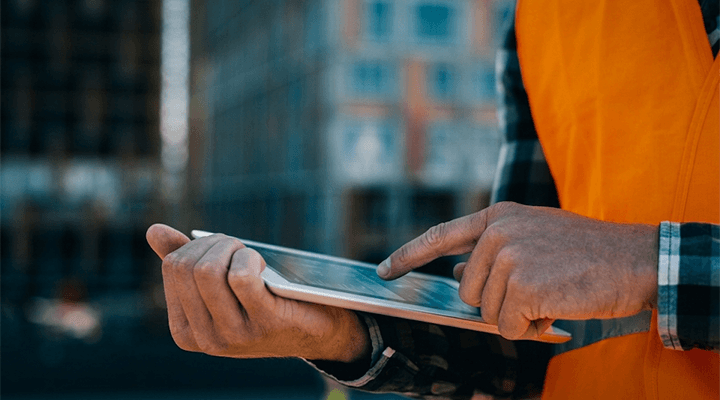
While telehealth has revolutionized remote consultation, the absence of real-time clinical data often limits its effectiveness to simple triage. By integrating camera based health monitoring, organizations can replace subjective "best guesses" with real-time telehealth vital signs. For heavy industries like mining and oil & gas, adopting remote patient monitoring without devices minimizes unnecessary medical evacuations, enhances onsite safety, and provides a clear path to ROI through lower operational overhead and improved risk management.
Telehealth has bridged the gap between remote sites and medical expertise, yet a fundamental gap persists. When a healthcare provider cannot see a patient's actual physiological state, they are forced to rely on subjective self-reporting. This lack of data limits the consultation to basic triage rather than a definitive medical assessment.
How does camera based health monitoring solve the telehealth data gap?
The primary limitation of traditional remote care is the reliance on physical hardware. In high-stakes environments like offshore rigs or isolated construction sites, distributing and maintaining wearable sensors for every employee is logistically complex and expensive. This is where rPPG (remote photoplethysmography) technology provides a scalable alternative.
By analyzing facial blood flow via the light reflections captured by a standard smartphone or laptop camera, AI can extract clinical-grade data. This allows for the capture of contactless vital signs including heart rate, respiration rate, and oxygen saturation in under 30 seconds. To see how this compares to traditional methods, view our analysis on rPPG vs Traditional Vitals Hardware.
The Financial Impact of Data-Driven Health
For industry executives, the transition to software-based monitoring is a strategic financial move.
Reduced Medevac Costs: Unnecessary emergency evacuations in the remote sectors cost tens of thousands of dollars per incident. Having instant access to contactless vital signs allows onsite medics to differentiate between minor stress and a genuine cardiovascular event, ensuring resources are used only when necessary.
Decreased Downtime: Early detection of fatigue or illness through remote patient monitoring without devices prevents onsite accidents, keeping projects on schedule and reducing insurance premiums. Research into Remote Patient Monitoring ROI suggests that data-backed prevention is the most effective way to protect the bottom line.
Scalability: Unlike wearable tech, software-based monitoring has zero marginal cost per user once deployed, making it the most cost-effective way to monitor large-scale workforces.
Moving Beyond the Device: Achieving High Compliance
The shift toward camera based health monitoring removes the friction of compliance. Workers no longer need to manage wearable devices or remember to charge batteries. A simple 30-second check-in at a site kiosk or via a mobile device provides the necessary data to make informed "fit-for-duty" decisions. According to research published in Nature, rPPG technology is rapidly approaching clinical-grade accuracy, making it a viable tool for professional remote monitoring.
Key Considerations for Strategic Implementation
Why are telehealth vital signs essential for remote clinical decision-making? Objective data removes the ambiguity of remote consultations. Vitals provide a clear physiological baseline, allowing clinicians to make high-confidence decisions that reduce liability and improve patient outcomes.
How does contactless technology capture data without a physical connection? The system utilizes AI to detect volumetric changes in facial blood vessels through a standard video feed. The algorithms process these optical signals to calculate heart rate, and stress levels with high precision.
Can remote patient monitoring without devices be integrated into our current tech stack? Yes. Modern solutions are designed for easy integration. Via SDKs or APIs, the monitoring capability can be embedded directly into existing safety portals, HR management systems, or custom telehealth apps.
How is data privacy handled in camera based health monitoring? Leading platforms prioritize "privacy by design." The video stream is processed in real-time and immediately discarded. Only the resulting numerical data is transmitted to the health record, ensuring full compliance with HIPAA and GDPR standards.
What is the expected ROI for the mining and construction sectors? ROI is driven by three main factors: the avoidance of high-cost emergency evacuations, the reduction of onsite accidents through fatigue monitoring, and the elimination of hardware procurement and maintenance costs.
Is rPPG accurate enough for professional medical use? Current AI models show a high correlation with medical-grade contact sensors. While intended for screening and monitoring rather than primary diagnosis, it provides a reliable, data-driven layer of protection for remote workforces.
For Further Reading: