10 Best AI-Powered Remote Health Monitoring Platforms 2026
We reviewed the top 10 AI-powered remote health monitoring platforms for 2026 — comparing Upvio, AHI, Binah.ai and more on accuracy, integration, and value.
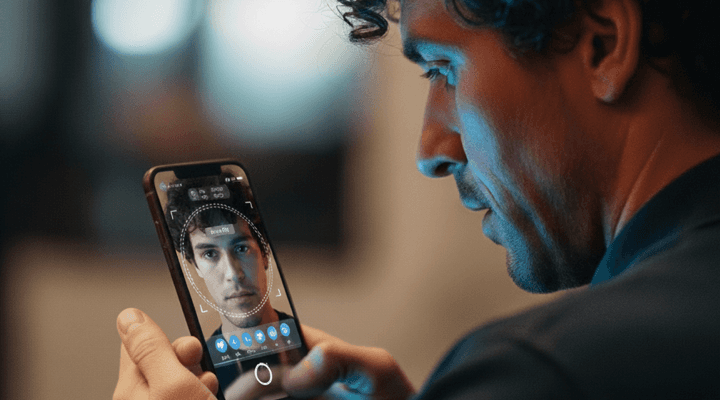
The era of wearables is evolving. We are now entering the age of Invisible Health where standard cameras, powered by rPPG (remote photoplethysmography) and AI, can capture clinical-grade vitals without a single wire, cuff, or smartwatch.
The challenge is no longer technology access - it's selection. Which platform offers the best mix of accuracy, user experience, and meaningful data?
We analyzed the top 10 players in the market to help you find the right solution for your organization.
1. Upvio (Best Overall for Human-Centric AI & Instant Scalability)
Best For: Healthcare, insurance, employee health safety and wellbeing, transport, weight loss.
Verdict: The only true turn-key platform for remote health monitoring, offering the fastest route from testing to enterprise-scale deployment.
Upvio stands out as a complete, ready-to-use platform that focuses on delivering clinical-grade Vitals AI. It combines a modern, frictionless design with advanced AI algorithms known for high accuracy that improves over time. Upvio removes the technical barriers of rPPG technology, allowing you to integrate vital sign monitoring immediately without development cycles.
Key Features:
Turn-Key platform: A ready-to-use solution with built-in infrastructure, end-to-end hosting, and data governance, allowing you to start measuring vitals immediately without building from scratch.
Flexible Deployment: Vitals AI is designed to run independently, integrate seamlessly with any existing CRM or EHR, or work out-of-the-box.
Security & Compliance: Operates on a privacy-by-design framework with end-to-end encryption and no video storage (processing is real-time). Fully compliant with GDPR and HIPAA, with SOC 2 and ISO 27001 certifications in progress.
Device-Agnostic: Works on any smartphone, tablet, or desktop camera - no wearables required.
Strengths:
Zero Friction: Offers a free plan and is incredibly easy to try and test, allowing for immediate proof-of-concept.
Flexible & Customizable: Plans are designed to adapt to your specific needs. Features like scan credits and additional health metrics are available, ensuring pricing remains flexible, and you only pay for what your business uses.
Seamless Integration: Designed to plug into existing digital engagement and onboarding workflows easily, or run independently.
2. Advanced Health Intelligence (AHI)
Best For: Insurance underwriting & fitness apps.
Verdict: A SDK for collecting varied biometric data, though user experience depends heavily on integration.
Advanced Health Intelligence (AHI) is a B2B favorite for its "check engine light" approach. They have aggregated multiple scanning technologies into a comprehensive SDK, making them a go-to for insurers needing to stratify risk across large populations.
Features:
FaceScan: Estimates heart rate, respiration, and blood pressure in ~30 seconds.
BodyScan: Uses on-device processing to estimate body composition and dimensions (waist, hip, body fat).
DermaScan: AI capabilities to identify 588 distinct skin conditions.
Biometric Health Assessment (BHA): Combines the above scans for a total health risk score.
Strengths:
The "Triple Threat": One of the few platforms offering vitals, body composition, and dermatology in one suite.
Privacy-First: Strong emphasis on on-device processing (especially for BodyScan) to minimize data privacy risks.
Risk Prediction: proven useful for insurers looking to stratify population risk without physical exams.
3. Binah.ai
Best For: General wellness & insurance spot checks
Verdict: A solid, technically robust SDK for standard vital monitoring.
Binah.ai is a well-established player known for its software development kit (SDK). It focuses heavily on "Spot Checks" for general wellness and has recently added blood count features. It's a workhorse for insurance and wellness apps but lacks the emotional/behavioral context found in Upvio.
Strengths:
Broad range of biomarkers (including hemoglobin estimates); runs locally on devices.
4. NuraLogix (Anura)
Best For: Chronic disease screening
Verdict: A great platform for deep metabolic insights.
NuraLogix uses "Transdermal Optical Imaging" to extract over 100 health parameters from a 30-second video scan. This includes risk predictions for HbA1c, Type 2 diabetes, and hypertension.
Strengths:
Impressive depth of health risk markers; strong research backing.
5. Lifelight
Best For: Regulated clinical environments (EU)
Verdict: The compliance king for Europe.
Lifelight sets itself apart by chasing hard regulatory clearances. It is medically certified (EU MDR Class IIA) for measuring blood pressure and pulse. It is designed for clinical workflows where regulatory boxes must be checked.
Strengths:
High regulatory trust; clinically validated accuracy.
6. Shen.ai
Best For: Modern consumer health apps
Verdict: Fast and visually impressive, but young.
Shen.ai offers real-time physiological extraction with a slick visual overlay. It focuses on the speed of integration and the "cool factor" of the scan. Their SDK provides real-time overlays that make the scanning process feel futuristic.
Strengths:
Excellent UI/UX feedback during the scan; modern SDK.
7. FaceHeart
Best For: FDA-regulated cardiac monitoring
Verdict: A trusted name for heart rate monitoring.
FaceHeart is a spin-off from MediaTek and focuses on video-based vital sign monitoring. It has achieved FDA 510(k) clearance for heart rate, which is a significant milestone.
Strengths:
Regulatory credibility (FDA); strong backing from tech giants.
8. Fedo.ai
Best For: High-volume insurance underwriting
Verdict: The speed demon for insurers.
Fedo.ai claims to predict health risks in just 14 seconds. It is heavily optimized for the insurance sector to predict underwriting risks and medical costs.
Strengths:
Extremely fast scanning; built specifically for financial/risk use cases.
9. Caire.ai
Best For: Hospital & continuous monitoring
Verdict: The innovator to watch.
Caire.ai is an emerging player focusing on continuous monitoring in clinical settings, turning standard cameras into hospital-grade sensors for patient observation.
Strengths:
Continuous monitoring capability; hospital focus.
10. Vitacam
Best For: Remote Triage (Europe)
Verdict: The remote triage tool.
Vitacam is a CE-marked Class IIA medical device platform suited for remote patient monitoring. It emphasizes video-based observation for triage.
Strengths:
Good regulatory standing in the EU; simple to use for elderly populations.
The Bottom Line
If you need a clinical-grade spot check, Lifelight or FaceHeart are strong contenders. If you need deep metabolic data, NuraLogix leads the pack. But if you want to understand the whole person, combining clinical-grade vitals with the emotional intelligence needed to drive real behavior change, Upvio is the clear winner for 2026.
Ready to make your AI more human? Learn More About Upvio
Further reading:
Wearable-free vital signs monitoring
Ambient vital monitoring with rPPG
Remote vital signs monitoring
Data gaps in health monitoring